BLADE2CIRC is focused on the development of more circular and greener solutions for wind turbine blades. Among the different technologies being researched within the project, particularly in this first period, ITA is making progress on the development of adhesive joints with debonding-on-demand capacity (DoD) and self-healing coatings.
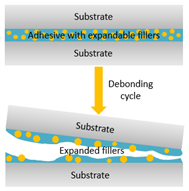
The first technology is identified as a key characteristic of the next generation of adhesives, which must comply with the increasingly demanding requirements related to sustainability. The separation phase is identified as a key step in most of the recycling procedures and as an enabler of other EoL routes as reuse, repurpose and repairing. Structural adhesives used in blade manufacturing are the most challenging for the DoD because they require both high joint strength in service and easy separation at the end of life, which are conflicting needs. Improving one characteristic often worsens the other. Then, a compromise must be found, introducing a trigger mechanism that facilitates the separation but with a minimum effect on the mechanical response of the joints in service. The approach being explored by ITA is based on the incorporation of thermo-expandable particles (TEPs).
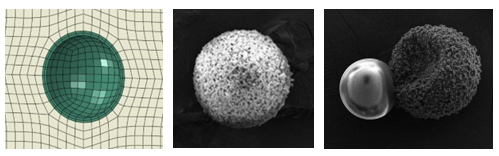
The second technology will allow to obtain more durable coatings and, consequently, extend the lifespan of the blades. The concept behind this technology is a material that ‘bleeds’, release a healing substance when damaged, which then fills and repairs cracks and fissures. ITA team is continuing working on the design and synthesis of the microcapsules that contain the healing agent, looking for the maximum effectiveness in this new functionality. This is being done through a combination of simulation and experimental techniques that are making it possible to determine optimal parameters and processes.
Stay tuned for more updates and insights as we shape the future of renewable energy.