Europe is at the forefront of the wind energy sector, producing more than 70% of global wind energy and meeting nearly 14% of the EU’s total electricity demand. However, the rapid growth of wind farms since the 1990s poses new challenges, especially when it comes to end-of-life management of these structures.
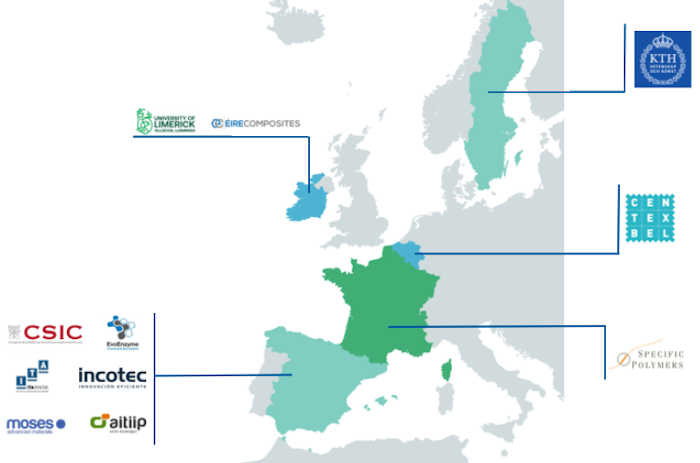
To address these concerns and promote a more sustainable future for wind energy, the EU-funded Blade2Circ project aims to develop a new generation of wind turbine blades using high-performance bio-based composite materials. This initiative, with a budget of nearly €4 million, is led by Aitiip Technology Centre and brings together a consortium of 11 partners from France, Sweden, Belgium, Ireland, and Spain.
Blade2Circ aims to improve wind turbine recyclability by designing components that facilitate blade dismantling, such as a reversible adhesive, as well as developing new chemical and enzymatic degradation processes to address resin end of life. The project will also investigate ways to improve blade performance, extend their useful life, and facilitate efficient dismantling, thereby promoting circularity throughout the value chain.

Blade2Circ will contribute on the following aspects:
- Improve global sustainability by exploring performance of new bio-based composite materials and reversible bio-based resins, offering a greener alternative to traditional petroleum-based materials. In addition, it will develop new chemical and enzymatic degradation processes to optimize the recyclability of the blades.
- Enhance circularity and efficiency in the life cycle by developing innovative processes such as self-healing coatings, improving separation efficiency and value retention.
Blade2Circ will pave the way to a more sustainable future for wind energy, contributing to the European Commission’s goal of becoming climate neutral by 2050.
Project Consortium
The Blade2Circ project is funded by the European Commission under Pillar II (Cluster 5 – Climate, Energy and Mobility) and has a total budget of almost 4 million euros. It began on April 1, 2024, and lasts 42 months. The project, coordinated by Aitiip Technology Centre, involves 11 partners from 5 different countries: Aitiip Technology Centre, Moses Productos, University of Limerick, CSIC, Evoenzyme, Specific Polymers, Centexbel, ITA, ÉireComposites, KTH and Incotec.