At BLADE2CIRC, we are committed to tackling the challenges of sustainability and recyclability in composite materials. One of our key collaborators, Centexbel, plays a crucial role in advancing this mission by bringing decades of expertise in textiles and plastics to the table.
A Commitment to Sustainable Materials
Centexbel has long supported textile and plastic industries in their transition to greener futures. Now, as part of BLADE2CIRC, they’re bringing their expertise and cutting-edge facilities to the forefront of innovation.
One of their key contributions lies in developing bio-based carbon precursors, collaborating with the University of Limerick to produce fibres derived from natural sources. These fibres are then integrated into new textile reinforcements, combining bio-based materials with traditional components through advanced weaving technology.
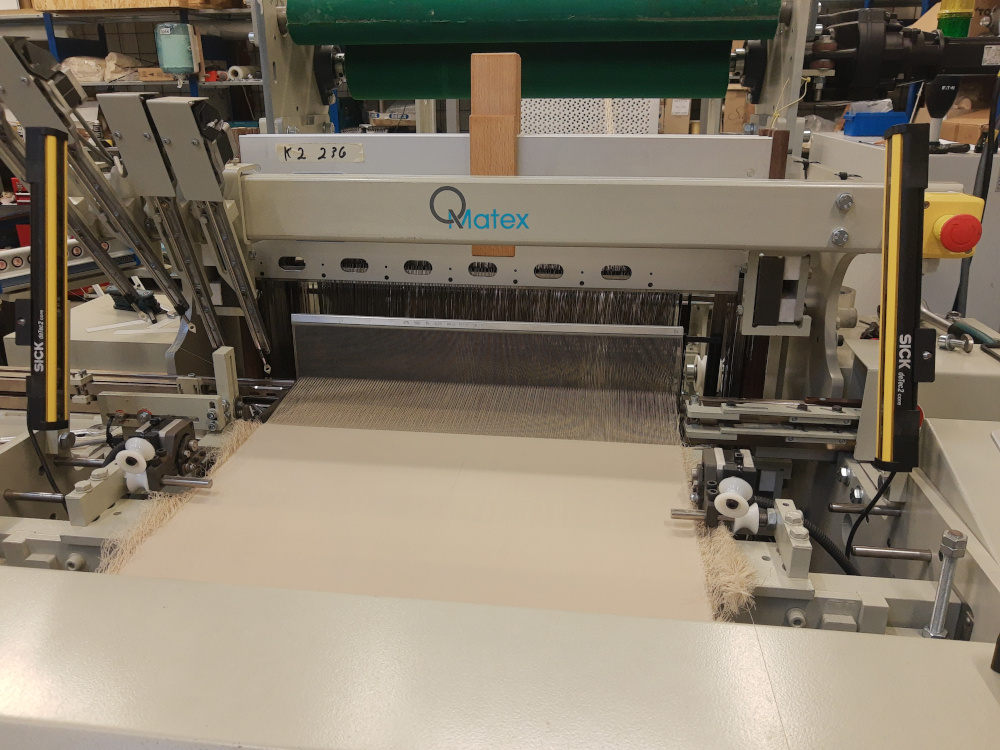
Machinery Designed for Innovation
Centexbel’s contribution is rooted in their state-of-the-art textile equipment, which enables the creation of bio-based and hybrid reinforcements tailored for composite materials. Their weaving machines are designed for precision and flexibility, featuring capabilities like:
• Double weft insertion systems, ideal for enhancing material strength.
• Customisable motion profiles, powered by servo motors for unique weaving patterns.
• Multilayer capabilities, allowing up to 24 frames for complex designs.
These features make it possible to combine bio-based carbon fibres with conventional materials, resulting in reinforcements that balance sustainability and performance.
For shapes that demand intricate geometries, Centexbel employs interlock braiding machines. These machines can produce four layers of braided materials, interlocked with high precision to create robust, multilayered structures. This is crucial for applications requiring advanced durability and recyclability, key goals for BLADE2CIRC.
Stay tuned for more updates and insights as we shape the future of renewable energy.