Developing innovative bio-based composite systems represents a major step toward enabling more circular wind turbine blades. However, bringing new materials to market in the wind energy sector involves more than technical performance. Because these materials operate in safety-critical structures, they must comply with established standards and regulatory requirements from the earliest stages of development.
To address this challenge, EireComposites led a comprehensive standards assessment and regulatory mapping activity within the project. The objective was clear: ensure that newly developed bio-based and dynamic thermoset composite systems are positioned for safe, compliant and realistic industrial adoption.
A structured review of applicable testing and qualification standards was carried out, covering key areas such as manufacturing processes, mechanical performance, durability, environmental impact, and health and safety requirements. Internationally recognised methodologies were analysed and used to benchmark the new materials against state-of-the-art composite systems currently deployed in wind turbine blades. This approach ensured that material development remained aligned with recognised industry practice while pushing technological boundaries.
Addressing Standards Gaps in Novel Bio-Based Composites
One important finding emerged from this work: novel bio-based and dynamic thermoset systems do not always fit seamlessly within existing standards. Many current testing frameworks were originally developed around conventional resin chemistries and fibre systems. When new formulations, curing mechanisms, or circularity features are introduced, certain assumptions embedded within these standards may no longer fully reflect material behaviour. In some cases, no directly applicable standard exists due to the innovative nature of the materials.
To overcome these gaps, each key project output was systematically mapped against relevant standards and regulatory requirements. Where clear certification pathways were available, these were documented. Where gaps were identified, structured internal evaluation procedures were defined to ensure consistent, transparent and technically robust assessment. Importantly, these procedures are designed in a way that could contribute to future updates of industry standards as circular materials become more widespread.
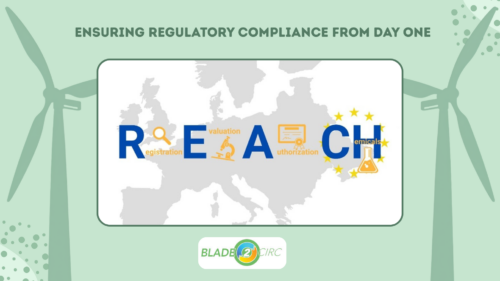
In parallel, regulatory alignment under REACH was assessed, including screening for Substances of Very High Concern (SVHC). The parameters evaluated to date indicate no immediate compliance concerns. Where material development is still ongoing, additional testing has been planned to ensure continued regulatory conformity throughout the product lifecycle.
By integrating regulatory considerations early in the innovation process, the project reduces the risk of barriers at the point of industrial uptake. This proactive approach ensures that sustainable composite solutions are developed not only with performance and circularity in mind, but also with full awareness of the regulatory landscape that governs their safe deployment in the wind energy sector.
Stay tuned for more updates as we continue our work to transform the wind energy industry and create a greener, more sustainable future.